
Case Study: Saving $2.3 Million on a Medical Office Development
The Challenge
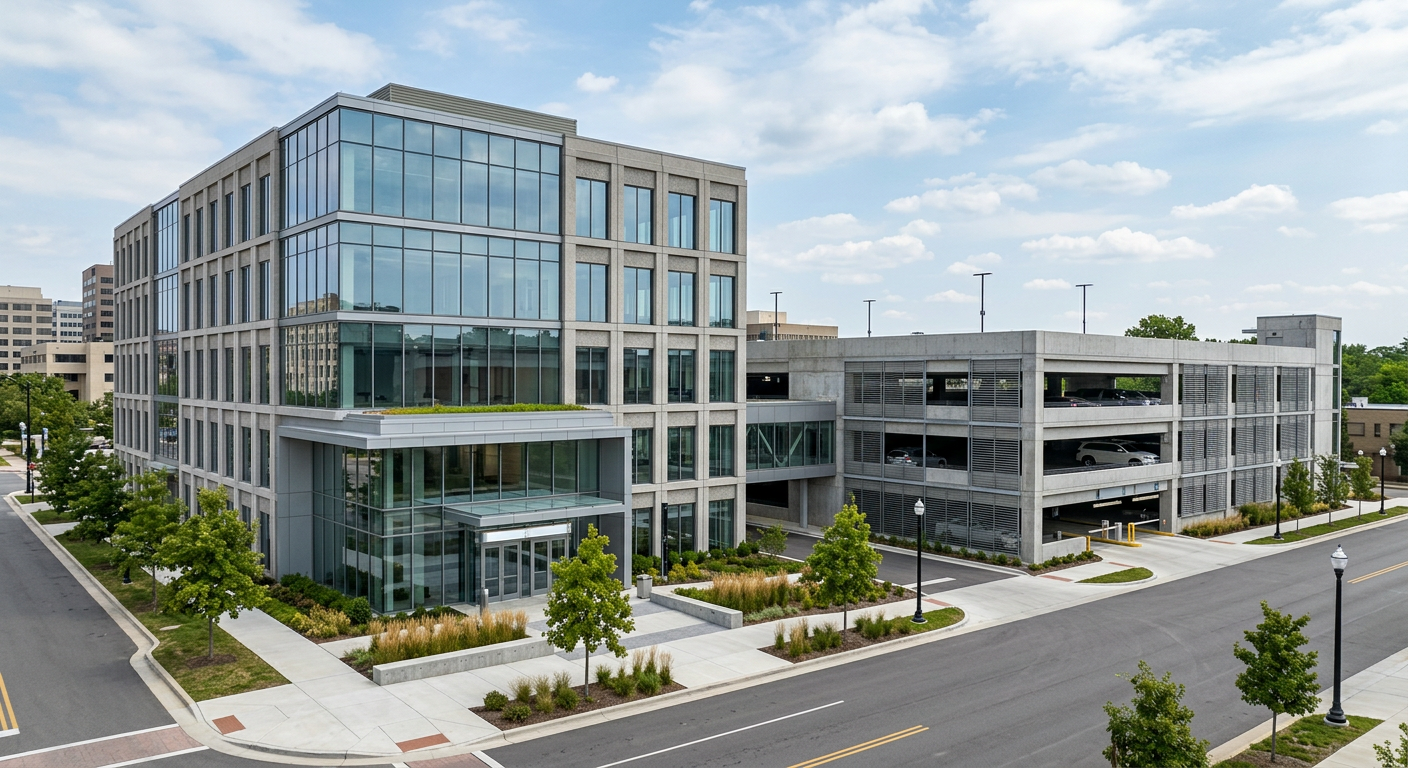
A developer came to Everwest Engineering with a mixed-use site on a very flat parcel. Phase one included a medical office building and a parking garage. Flat land makes stormwater hard to manage. With little natural grade to work with, the preliminary engineering design relied on a large stormwater pump station to move runoff off the site, at an estimated cost of about $2 million.
The early design also called for on-site infiltration and underground stormwater storage. Together, these items added heavily to the phase one budget, before counting the long-term cost of running and maintaining a pump station.
Our Approach
Everwest took a fresh look at the site's drainage from the ground up. We wanted a design that met every regulatory requirement while cutting cost and long-term risk for our client.
Eliminating the Pump Station ($2,000,000 saved)
We carefully reviewed site grading, pipe slopes, outlet elevations and the downstream conveyance system. From that work, we developed a stormwater management strategy that relies entirely on gravity drainage. By optimizing the grading design and the layout of the storm sewer network, we removed the need for the pump station. Gravity systems also have fewer mechanical parts that can fail, lower energy and maintenance costs, and no risk of pump failure during major storms.
Removing On-Site Infiltration Requirements ($150,000 saved)
Local soils on the site were poorly suited to infiltration, so infiltration measures would have been costly and unlikely to perform as intended. Everwest worked with the local government, presenting the site's soil conditions and a technical rationale. We secured approval to remove the infiltration requirement while still meeting the municipality's broader stormwater objectives.
Optimizing Pond Sizing to Remove Underground Storage ($150,000 saved)
We then worked with the City engineering department to size the stormwater management pond properly. Once the pond had enough capacity to handle the required storage volumes, the proposed underground storage system was no longer needed. The client avoided a major construction expense and a buried asset that would have needed ongoing inspection and maintenance.
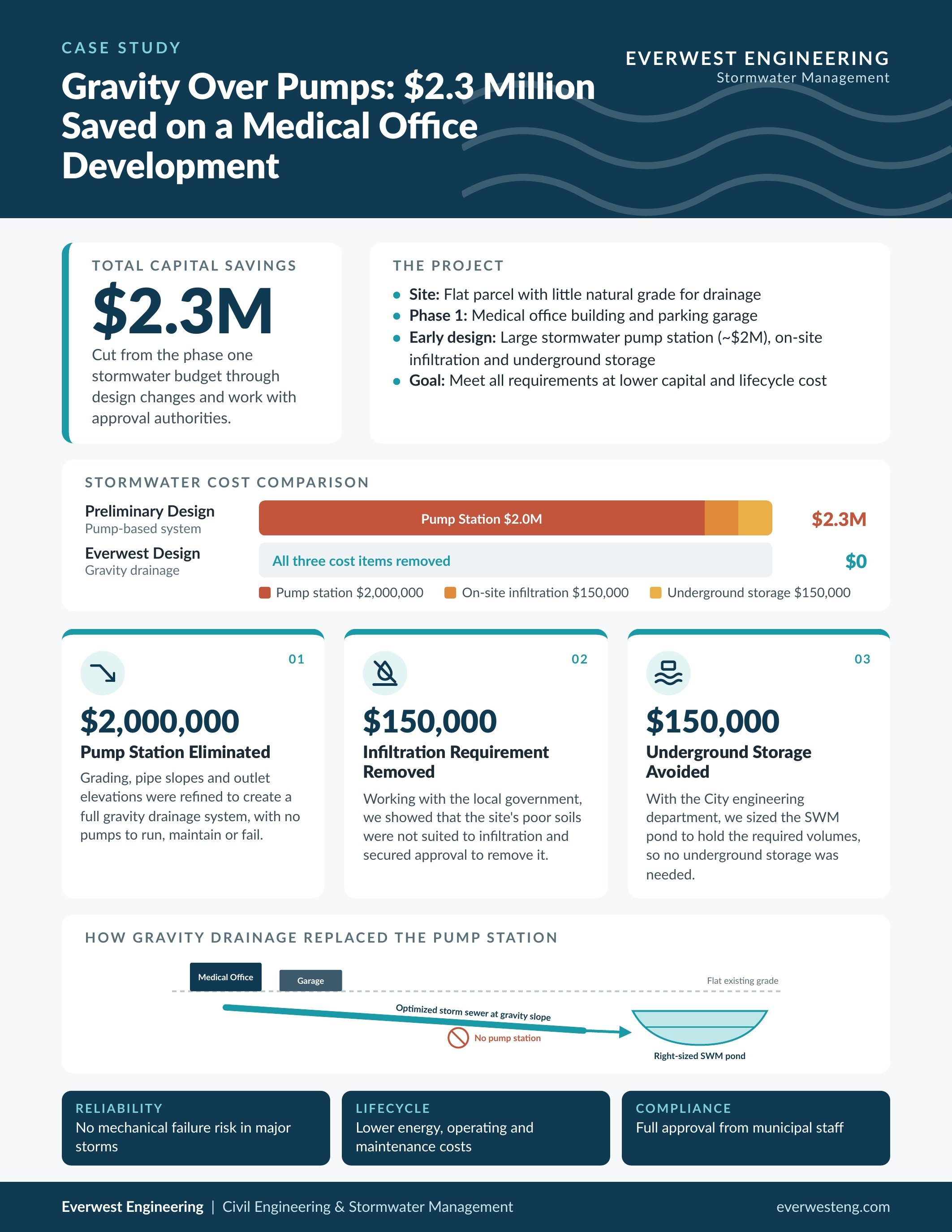
A schematic representation of the savings achieved through intelligent design.
The Results
Everwest's stormwater strategy delivered:
$2.3 million in total capital savings
A simpler, more reliable gravity-based drainage system
Lower long-term operating and maintenance costs
Full regulatory compliance, backed by strong working relationships with municipal staff
Why It Matters
Early engineering decisions shape a project's budget for years. By pairing technical expertise with active, cooperative work with approval authorities, Everwest turned a costly, complex drainage problem into a simple and affordable solution. That let our client put more of their budget toward what matters most: delivering high-quality healthcare space to the community.
